Building Bridges Between Startups and City Authorities: A Case Study of “Open Innovation for Warsaw”


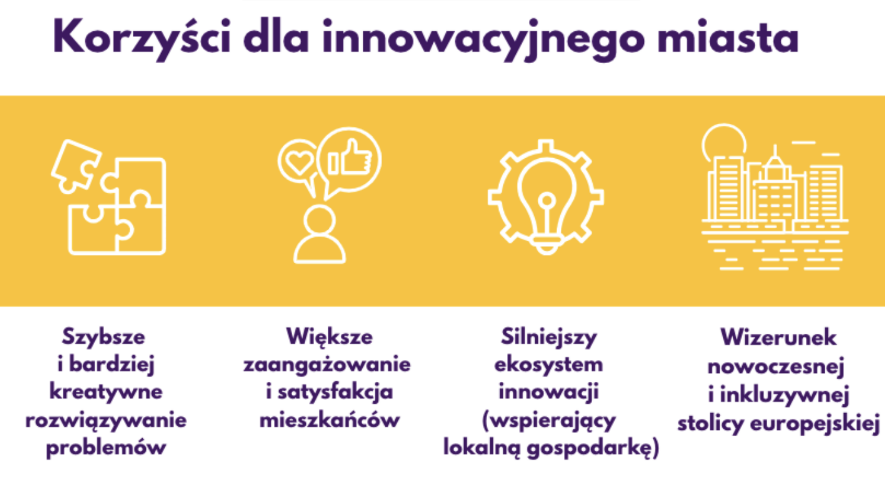
Even the most groundbreaking technology will fail if, on the other side, it does not encounter people who are open to change and institutional structures that support innovation.
This was the very premise behind the “Open Innovation for Warsaw” project, implemented by the MOST Foundation as part of the Warsaw Booster municipal acceleration program. We understood that for innovative startup solutions to become truly embedded in the urban fabric, we first needed to create the right environment within public institutions themselves.
The Open Innovation for Warsaw project was initiated by the MOST Foundation and carried out in cooperation with the Economic Development Office of the City of Warsaw as part of the Warsaw Booster program.
In this article, you will learn about the activities carried out within the project and why these experiences are worth replicating in other cities.
“Open Innovation for Warsaw” is a unique educational and development program that, unlike traditional acceleration tools aimed at startups, directs its efforts inward—straight to the heart of municipal administration. The program consists of intensive in-person workshops and online training sessions led by experts. Their goal is to provide public sector employees with knowledge about modern technologies, various innovation management and implementation models, all based on practical, real-world examples.
The initiative is primarily addressed to:
Thanks to this approach, public officials cease to be merely recipients of ready-made solutions and become active creators of urban innovation, capable of engaging in meaningful partnerships and dialogue with innovators and technology providers.
The world of agile startups often speaks an entirely different language from public administration, which operates within formal procedures and regulatory frameworks. This clash between procedures and innovation can stall even the most promising projects. On one side, there is a culture of rapid testing and learning through experimentation; on the other, the need to strictly adhere to procedures, budgetary discipline, and public procurement regulations.
This is a natural consequence of the responsibility borne by public institutions. Cities, municipalities, and local governments are accountable for public safety, continuity of services, and the quality of life of hundreds of thousands—and often millions—of residents.
This is precisely why education is the key. It builds mutual understanding and enables the creation of lasting bridges between these two distinct worlds. By investing in knowledge, we cultivate informed ambassadors of change within institutions. Collaboration ceases to be a difficult collision of realities and becomes a shared effort to design the future.
We focused on knowledge exchange and the presentation of concrete case studies, demonstrating that open innovation is a practical and effective tool. We introduced different collaboration models and began jointly building clear and secure pathways for cooperation with startups. We also worked on strengthening collaboration between the city administration and the startups participating in the Warsaw Booster acceleration program.
The first edition included three webinars and three workshops, bringing together more than 100 participants from the open innovation ecosystem, including representatives of businesses (both corporations and startups), public administration, and EU institutions.
We knew that the most effective education comes from bringing together diverse perspectives. That is why the MOST Foundation not only coordinated the project and led selected sessions—including an introduction to the concept of open innovation by Joanna Fogler and a presentation on implementations carried out within the Warsaw Booster program featuring Bartosz Grochowski—but also invited a broad group of experts to contribute their knowledge and experience.
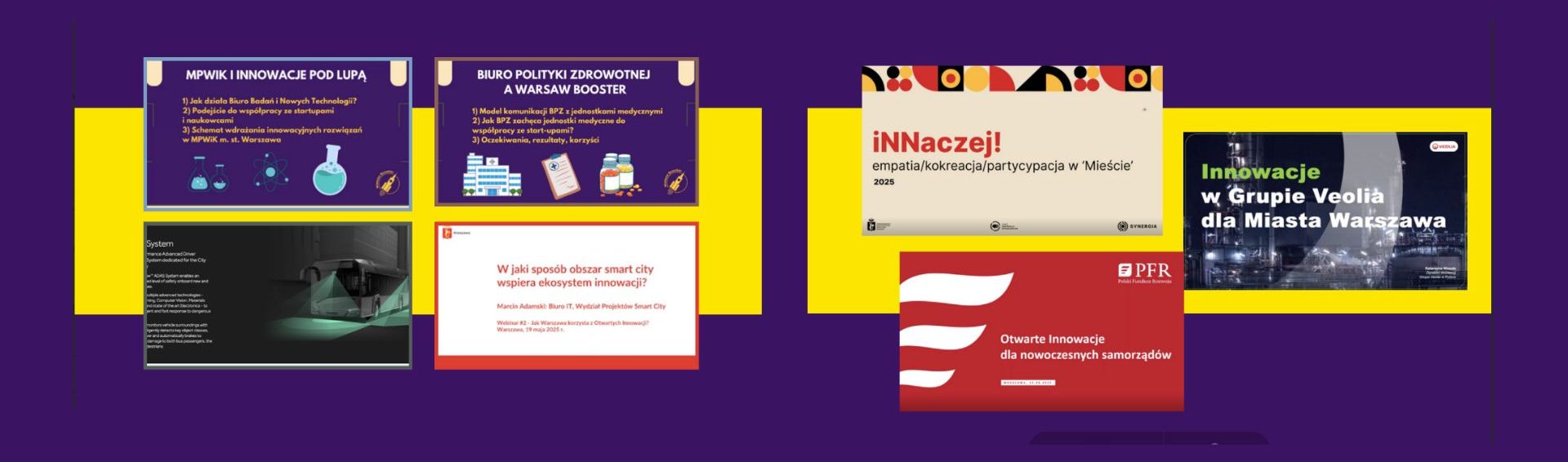
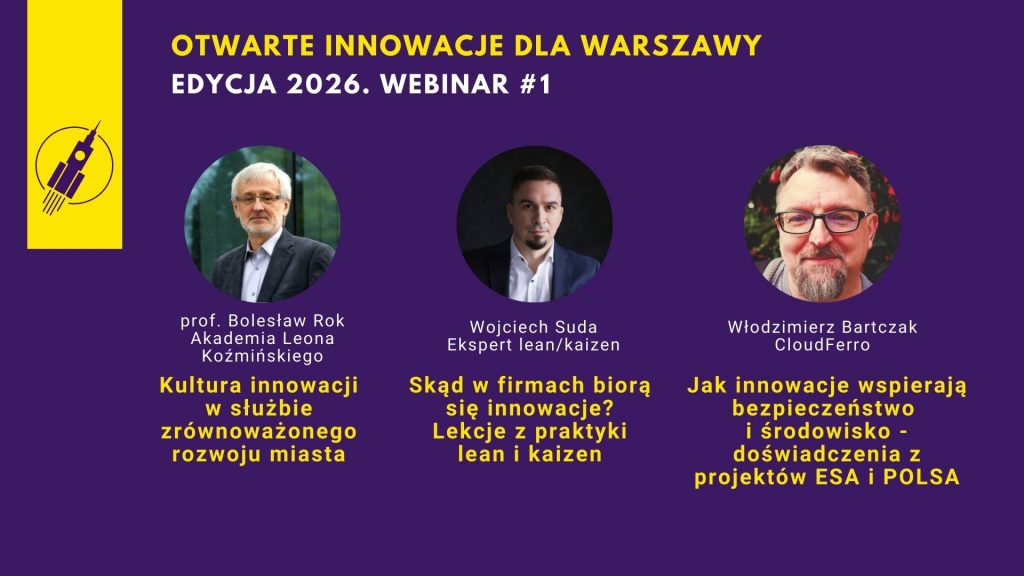
Among the experts who shared their practical know-how during the webinar series were:
The knowledge gained during the theoretical sessions served as a foundation for action, as participants moved into hands-on work during three in-person workshops held in creative urban spaces (including the Bielański Entrepreneurial Hub, the Andrzej Wajda Film Culture Centre, and Synergia).
Before moving into designing new solutions, we first examined our starting point. Together with participants, we conducted an in-depth mapping of how Warsaw currently approaches collaboration with innovation. We analyzed this process across three key dimensions: city-to-city, city-to-residents, and city-to-business and academia.
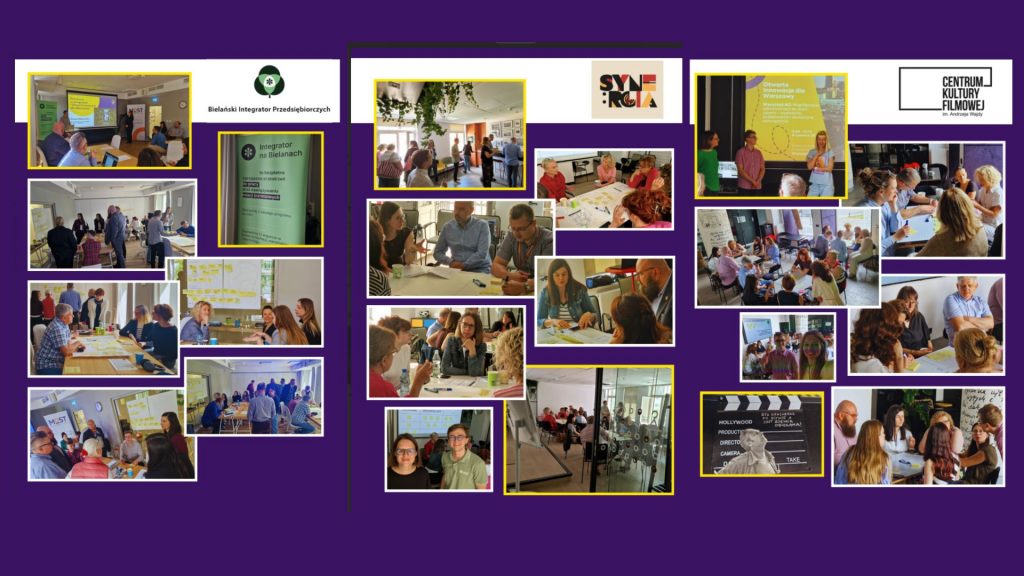
During these workshops, participants also openly identified the key barriers blocking innovation, grouping them into four main areas: formal issues (e.g. gaps in procedures), workforce and educational constraints, siloed communication, and challenges in understanding the specific nature of startups. Defining these problems allowed us to move into concrete action—each unit could answer a key question: in what model can and does my organization want to work with innovation? In this way, based on a thorough, self-developed diagnosis, we jointly outlined the first safe pathways for collaboration with startups.
In the second edition, we went a step further—from acquiring knowledge to building an organizational culture of innovation. Drawing on best practices from the corporate sector, we also took inspiration from solutions implemented in other cities. We additionally planned a session focused on best practices in innovative public procurement.
We opened the second edition with a webinar titled “Innovation Culture as a Driver of Change,” during which experts from business and academia provided a broader perspective:
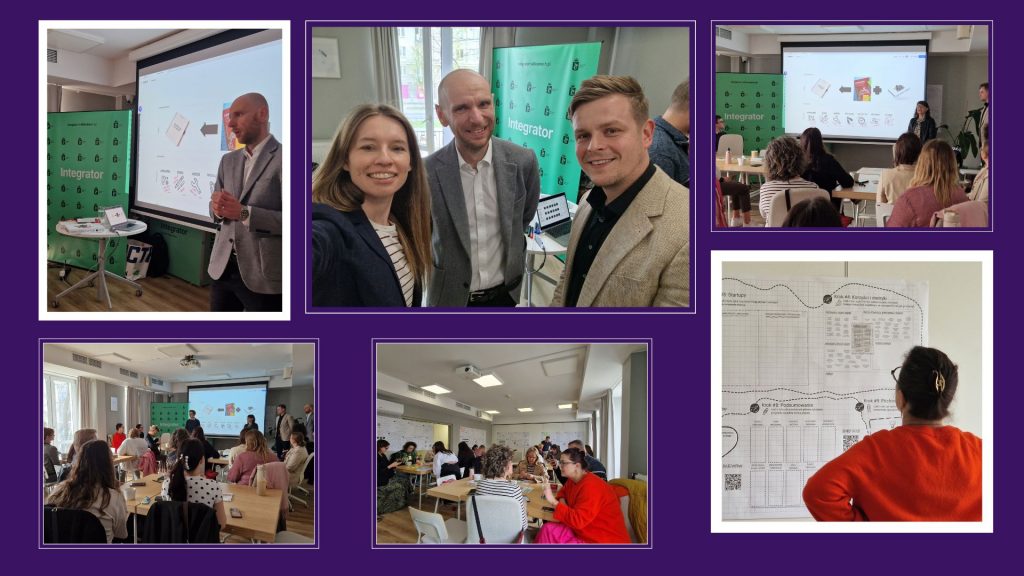
Another example of the program’s activities were full-day in-person workshops. In a fully packed room at the Bielański Entrepreneurial Hub, together with representatives of the city administration, we explored a central question: how can open innovation be effectively implemented within municipal structures?
The workshops were highly practical in nature:
In the first part, participants were introduced to different innovation management models (including hackathons and acceleration programs).
In the second part, we moved into action—teams worked in groups to design selected models, adapting them to their own needs.
The session was led by Marcin Szymański and Łukasz Cieśla from Open Innovation House, who shared their experience working with organizations that implement innovation on a daily basis within their structures.
It is worth emphasizing that the meetings described above are only a fraction of our activities within the “Open Innovation for Warsaw” program. The program calendar is much broader—we continuously fill it with additional webinars, hands-on workshops, and study visits that allow public officials to become even more deeply immersed in the world of technology and business. We are committed to a comprehensive approach; therefore, upcoming activities include a webinar with a law firm, a session with the National Centre for Research and Development (NCBR), and an inspiring study visit to the OrangeLab space.
While implementing the “Open Innovation for Warsaw” project, we became increasingly convinced that innovation is strongly dependent on local context. What works in one city cannot necessarily be replicated elsewhere in a 1:1 model.
However, the underlying mechanisms are universal. Large budgets and scale are not a prerequisite for driving change. The foundation lies in small, committed teams that believe in the idea and are supported by their local leaders.
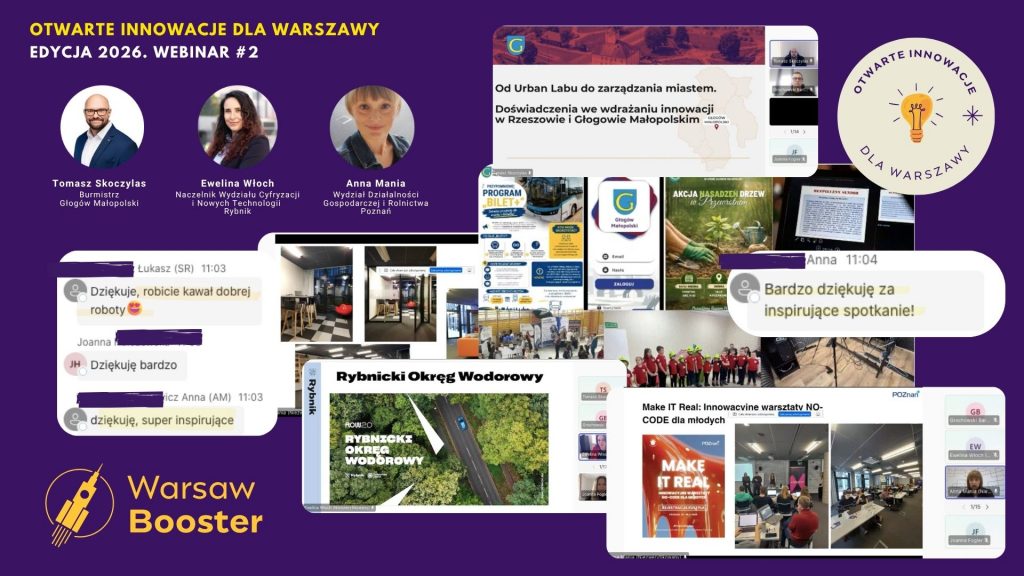
This is clearly illustrated by examples from across Poland. The practical side of implementing urban innovation was presented by invited guests during our case study-focused sessions:
These examples are the strongest proof that an innovation ecosystem can be built anywhere—the key lies in bold people who can turn vision into action.
Looking at both editions in retrospect, a less obvious but highly significant outcome of the entire process was the creation of a space that enabled people from different municipal offices, city companies, and districts to step away from their desks, meet each other, and work together.
As participants repeatedly emphasized, this opportunity to get to know one another, exchange ideas, and confront different perspectives brought tremendous value. Building genuine human relationships is the strongest foundation and catalyst for enabling them to work together in the future on truly impactful initiatives for the city.
In Warsaw, we have built an environment that knows how to collaborate with startups from the Warsaw Booster program and implement their solutions. We have proven know-how, but we also know how to adapt it to the realities of other cities and the specific needs of their residents.
Is your office or institution looking to open up to collaboration with startups? Are you seeking an effective way to build internal competencies within your teams and foster a culture of innovation?
Let’s build this process together. Contact us at: joanna.fogler@fundacjamost.pl and let’s talk about how we can transfer this experience to your local context.
The authors of this summary article on the “Open Innovation for Warsaw” project are Monika Serkowska and Joanna M. Fogler.


